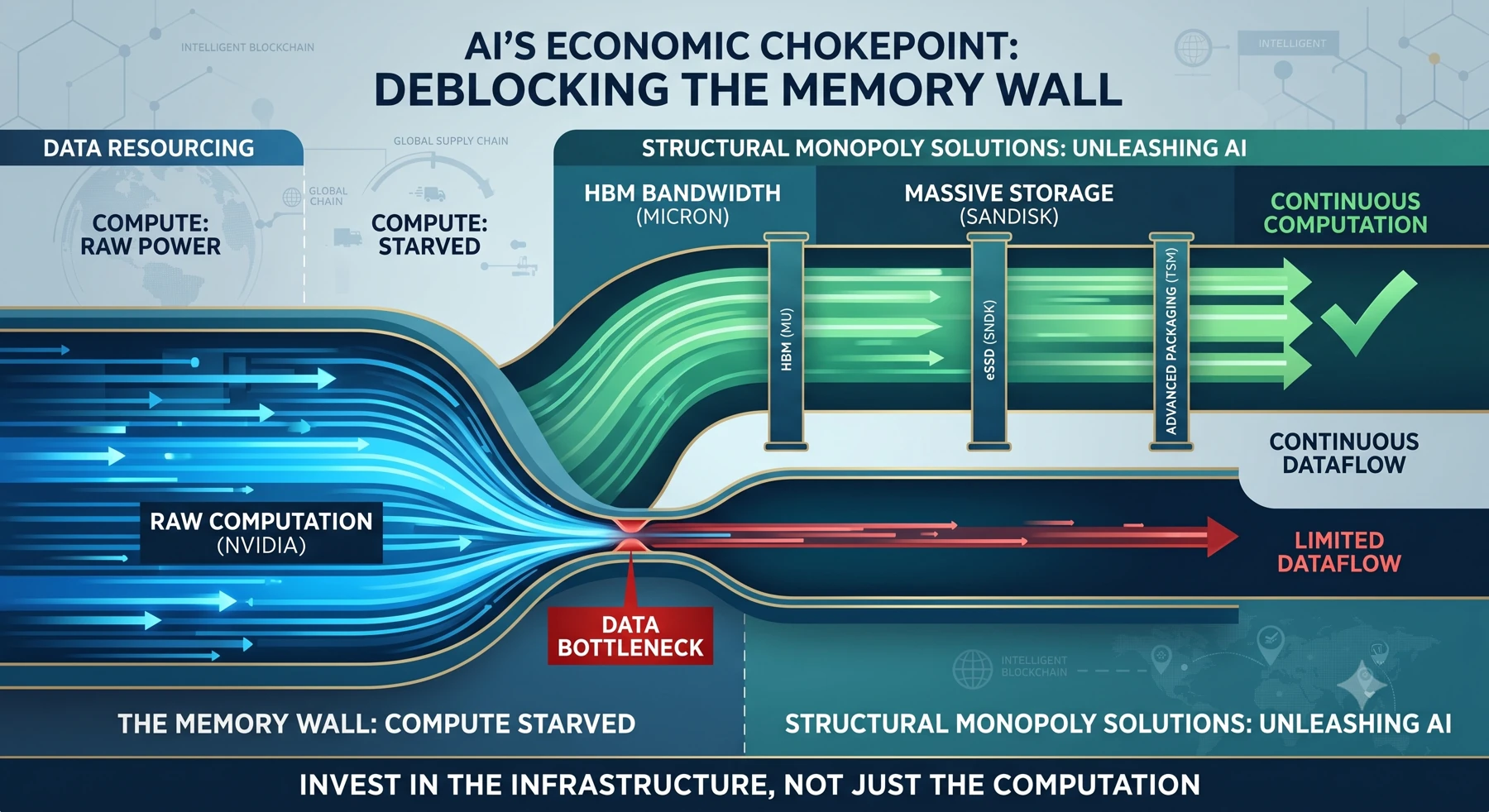
📊 𝗧𝗵𝗲 𝗠𝗲𝗺𝗼𝗿𝘆 𝗪𝗮𝗹𝗹: 𝗪𝗵𝘆 𝗔𝗜 𝗘𝗰𝗼𝗻𝗼𝗺𝗶𝗰𝘀 𝗮𝗿𝗲 𝗗𝗶𝗰𝘁𝗮𝘁𝗲𝗱 𝗯𝘆 𝗕𝗮𝗻𝗱𝘄𝗶𝗱𝘁𝗵 𝗮𝗻𝗱 𝗦𝘁𝗼𝗿𝗮𝗴𝗲
The market misunderstands the artificial intelligence infrastructure build-out. Most capital chases raw compute power, treating GPU processors as the sole bottleneck. Physics tells a different story.
We have hit the "Memory Wall." Data processing speeds have scaled exponentially faster than data transfer and storage capabilities. An AI processor fails if it starves waiting for data.
𝟭. 𝗧𝗵𝗲 𝗛𝗶𝘀𝘁𝗼𝗿𝗶𝗰𝗮𝗹 𝗦𝗵𝗶𝗳𝘁: 𝗙𝗿𝗼𝗺 𝗖𝗼𝗺𝗺𝗼𝗱𝗶𝘁𝘆 𝘁𝗼 𝗖𝗵𝗼𝗸𝗲𝗽𝗼𝗶𝗻𝘁
Historically, memory was a notorious boom-and-bust cyclical sector. Companies overproduced, flooded the market, and destroyed their own margins. That era is over. Consolidation has reduced the sector to a tight oligopoly. Today, the demands of AI require extreme capital intensity and complex packaging, creating structural scarcity. Memory is no longer a cheap commodity; it is a premium bottleneck.
𝟮. 𝗧𝗵𝗲 𝗛𝗕𝗠 𝗮𝗻𝗱 𝗦𝘁𝗼𝗿𝗮𝗴𝗲 𝗢𝗹𝗶𝗴𝗼𝗽𝗼𝗹𝘆
Training large language models requires holding hundreds of billions of parameters in active memory and storing petabytes of raw training data. We own both sides of this physical constraint:
• 𝗔𝗰𝘁𝗶𝘃𝗲 𝗕𝗮𝗻𝗱𝘄𝗶𝗱𝘁𝗵: $MU (Micron Technology, Inc.) controls a significant share of the High-Bandwidth Memory (HBM) market. Their HBM3E architecture operates with extreme power efficiency, a strict requirement for energy-constrained data centers.
• 𝗠𝗮𝘀𝘀𝗶𝘃𝗲 𝗦𝘁𝗼𝗿𝗮𝗴𝗲: $SNDK (Sandisk Corp/DE) provides the foundational storage architecture. Enterprise Solid State Drives (eSSDs) and high-density NAND flash are mandatory. Raw compute requires massive datasets, and the physical data must live somewhere before it reaches the processor.
𝟯. 𝗙𝘂𝘁𝘂𝗿𝗲 𝗣𝗲𝗿𝘀𝗽𝗲𝗰𝘁𝗶𝘃𝗲𝘀: 𝗧𝗵𝗲 𝗦𝘆𝘀𝘁𝗲𝗺-𝗟𝗲𝘃𝗲𝗹 𝗠𝗼𝗻𝗼𝗽𝗼𝗹𝘆
Looking forward, the capital expenditure from hyperscalers will disproportionately flow into upgrading this memory infrastructure. You cannot separate compute from memory. They operate as a fused system. Our portfolio isolates this exact intersection, capturing the value where Micron and SanDisk feed the architectures designed by $NVDA (NVIDIA Corporation) and physically manufactured by TSM (Taiwan Semiconductor).
𝟰. 𝗧𝗵𝗲 𝗠𝗮𝘁𝗵𝗲𝗺𝗮𝘁𝗶𝗰𝗮𝗹 𝗣𝗿𝗼𝗼𝗳
Our positioning ignores broad market noise to capture concentrated alpha. The early July drawdowns tested market resolve, but physical hardware requirements remain absolute. The year-to-date data validates our supply chain concentration:
• $SPX500 YTD: +𝟭𝟬.𝟲𝟳%
• $NSDQ100 YTD: +𝟭𝟴.𝟯𝟮%
• 𝗢𝘂𝗿 𝗣𝗼𝗿𝘁𝗳𝗼𝗹𝗶𝗼 𝗬𝗧𝗗: +𝟮𝟰.𝟯𝟯%
We do not buy companies that use AI. We buy the structural monopolies that make AI physically possible. Review the open positions and historical data directly on my profile.
#MacroStrategy #Semiconductors #HBM #PortfolioAnalysis #StructuralMonopolies