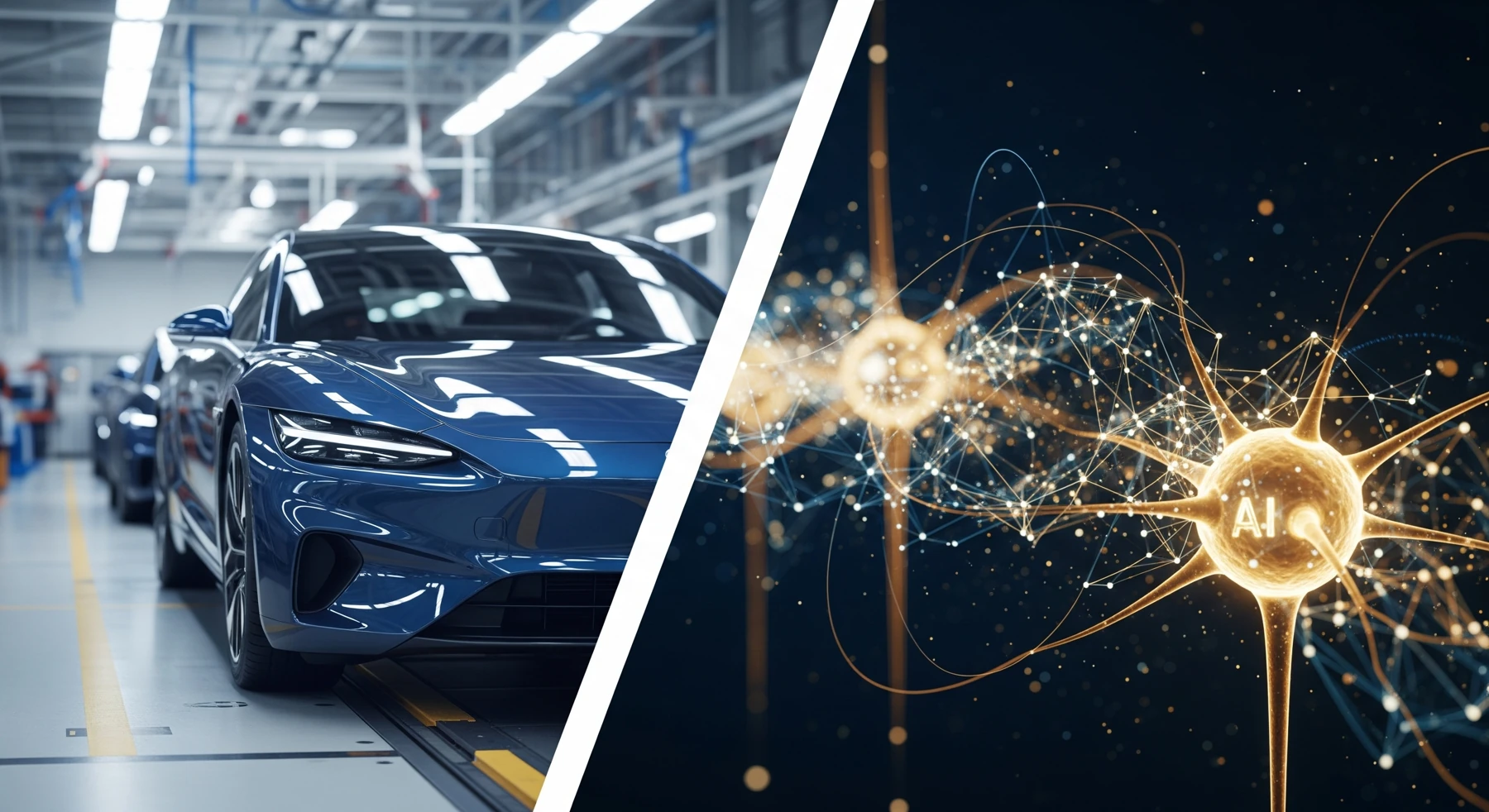
Not All Tech is Equal: Why I'm Avoiding EVs and Focusing on a Different Kind of Growth
Many of you know my portfolio is focused on high-growth technology stocks. However, a key part of my strategy is not just deciding what to own, but also what to avoid. That is why, for the foreseeable future, you will not find any pure-play EV manufacturers in my portfolio.
This isn't a theoretical position. It's a conclusion I came to after careful analysis, which led me to close my long-held, profitable position in $TSLA earlier this year. While the growth of companies like $01211.HK (BYD) is impressive, I believe they are facing the same fundamental challenges.
My reasoning is based on two core risks:
Vicious Price Wars: The EV sector is engaged in an aggressive price war that is severely compressing profit margins. It's a race to the bottom that benefits consumers but is detrimental to long-term investors.
Intense Competition: The legacy auto giants are now formidable competitors, leveraging decades of manufacturing expertise and massive scale. The EV space is rapidly becoming a low-margin, capital-intensive hardware business—very similar to the traditional auto industry.
So, where am I allocating capital instead?
My strategy is to focus on tech sectors with durable competitive advantages, high recurring revenue, and scalable, high-margin business models. For me, the clear opportunities are in:
AI & Semiconductors: The "picks and shovels" of the AI gold rush. Companies like $AMD and $NVDA provide the essential hardware that powers the entire revolution, capturing value from thousands of customers.
Enterprise Data & Software: Companies like $SNOW (Snowflake). They provide a mission-critical service for enterprises, with a scalable, consumption-based model and a strong competitive moat. This is a much more attractive business model than selling cars.
My goal is to invest in the architects of our digital future, not just the assemblers of its hardware. By focusing on these high-margin areas, I believe we are better positioned for sustainable, long-term growth.