Executive summary
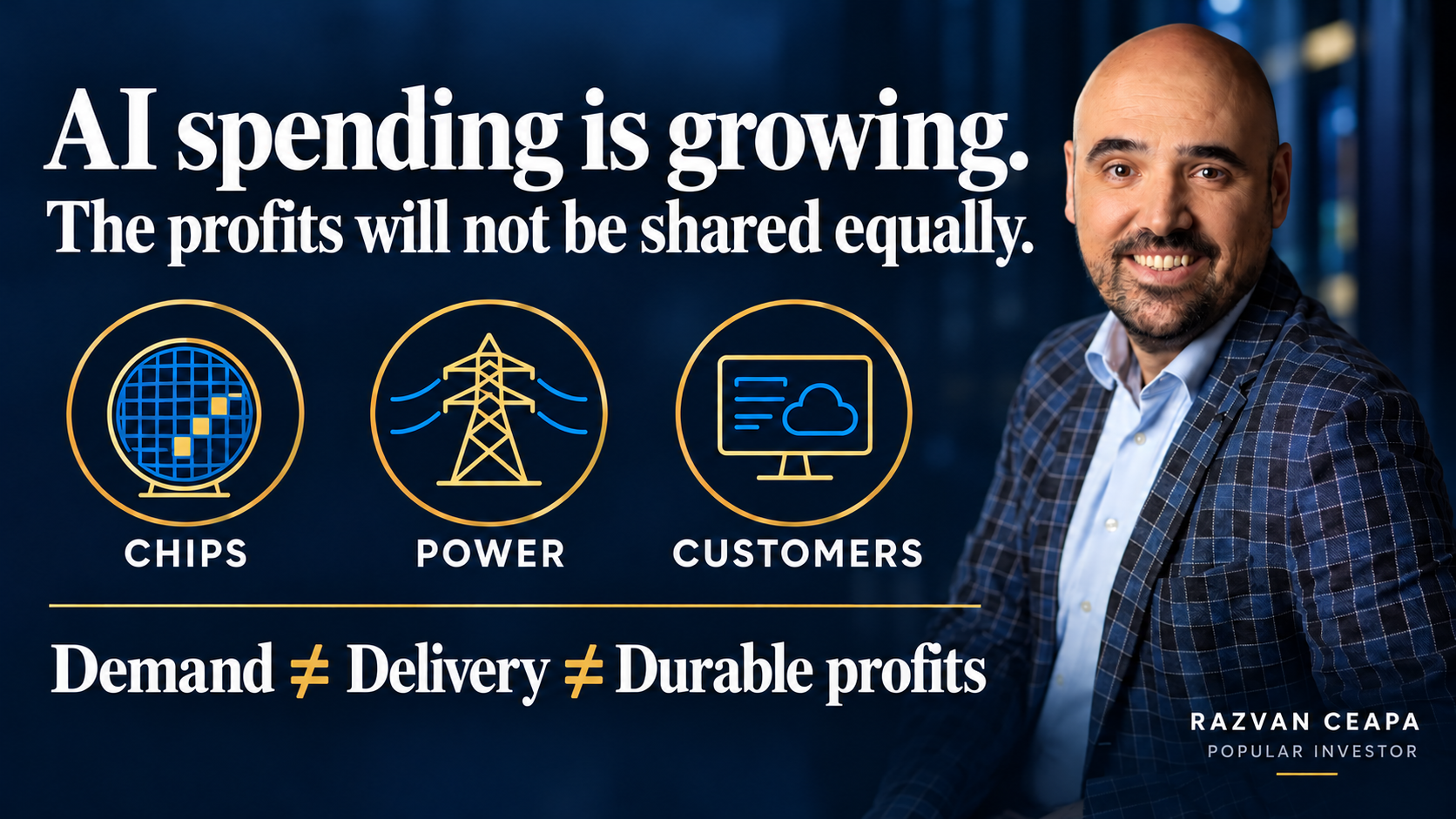
The results released by Lam Research, NextEra Energy and IBM on 21 October connect three parts of the AI investment cycle: chip manufacturing, power supply and business adoption. Our conclusion is that demand, delivery and durable profits must be assessed separately. Growing spending can support suppliers before the economics of the entire chain have been established.
We look for businesses that are difficult to replace and can retain attractive economics after the investment required to serve that demand. These results offer evidence at different stages of that process, rather than proof that every AI-related company will earn a lasting return.
Chips: more demand is already reaching the income statement
Lam Research reported September-quarter revenue of $8.22bn, up 22% from the previous quarter, with a 40.0% GAAP operating margin. Management linked its record results to AI-driven semiconductor demand and greater device complexity.
Lam sells equipment used to deposit and remove materials as chips are manufactured. More demanding chip designs can create more work for those tools, not just more chips to produce.
That is the part we find interesting: a supplier can benefit from the difficulty of manufacturing, rather than needing to pick the winning AI application.
But a strong quarter is not proof of permanent pricing power. Customer spending, export restrictions and competition still matter. We want to see whether technical difficulty can protect margins when the spending cycle becomes less generous.
Power: an order book is not electricity at the socket
NextEra Energy added 3.7GW of renewables and storage to its backlog, taking the total to about 36.7GW. Its October 21 update also described a developing data-centre power opportunity.
Those are not interchangeable claims. The backlog does not isolate AI demand, and it is not operating capacity. It includes projects with expected agreements and remains subject to development and construction risks.
This changes the investment question. Securing demand is one task; funding, permitting, connecting and delivering capacity at an acceptable return is another. A shortage can make an asset valuable without making every project profitable.
For capital-intensive businesses, the price of financing and who bears construction risk can matter as much as the size of the opportunity.
Customers: adoption is not moving at one speed
IBM reported third-quarter software revenue growth of 8% year on year, while consulting revenue was flat. At constant currency, the figures were 9% and 2%.
Management described broader AI deployment, but these segment totals are not a measure of AI revenue. Software includes much more than AI; consulting has its own spending cycles.
The useful signal is the unevenness. Buying software, integrating it into an organisation and producing a financial return are different stages. We should not assume they all accelerate together.
For the infrastructure spending to support lasting growth, customers eventually need benefits that justify repeat spending, rather than just impressive demonstrations.
What connects the week's news
These results give us evidence of spending and commitments across the chain, but not a clean audit of AI's final return on investment.
That is why our chokepoint thesis is about more than finding a shortage. We look for something difficult to replace, then ask who captures the economics after the required investment.
A bottleneck that consumes capital faster than it earns it is not the same as a business with durable pricing power. And even an excellent business can be a poor investment if its valuation already assumes flawless execution.
The question we take from this week: where is growing demand becoming repeatable cash generation, and where are investors still paying for delivery that lies ahead?
Follow our investment thinking on eToro: https://www.etoro.com/people/razvancd
Sources: company results, October 21, 2026
NextEra: https://www.sec.gov/Archives/edgar/data/37634/000075330826000077/neeq32026exhibit99.htm
NextEra presentation (slide 18): https://www.investor.nexteraenergy.com/~/media/Files/N/NEE-IR/reports-and-fillings/quarterly-earnings/2026/Q3%202026/Q3%202026%20Earnings%20Slides_v%20F.pdf
IBM: https://newsroom.ibm.com/2026-10-21-IBM-RELEASES-THIRD-QUARTER-RESULTS
Copy Trading is not investment advice | Capital at risk | Past performance does not guarantee future results