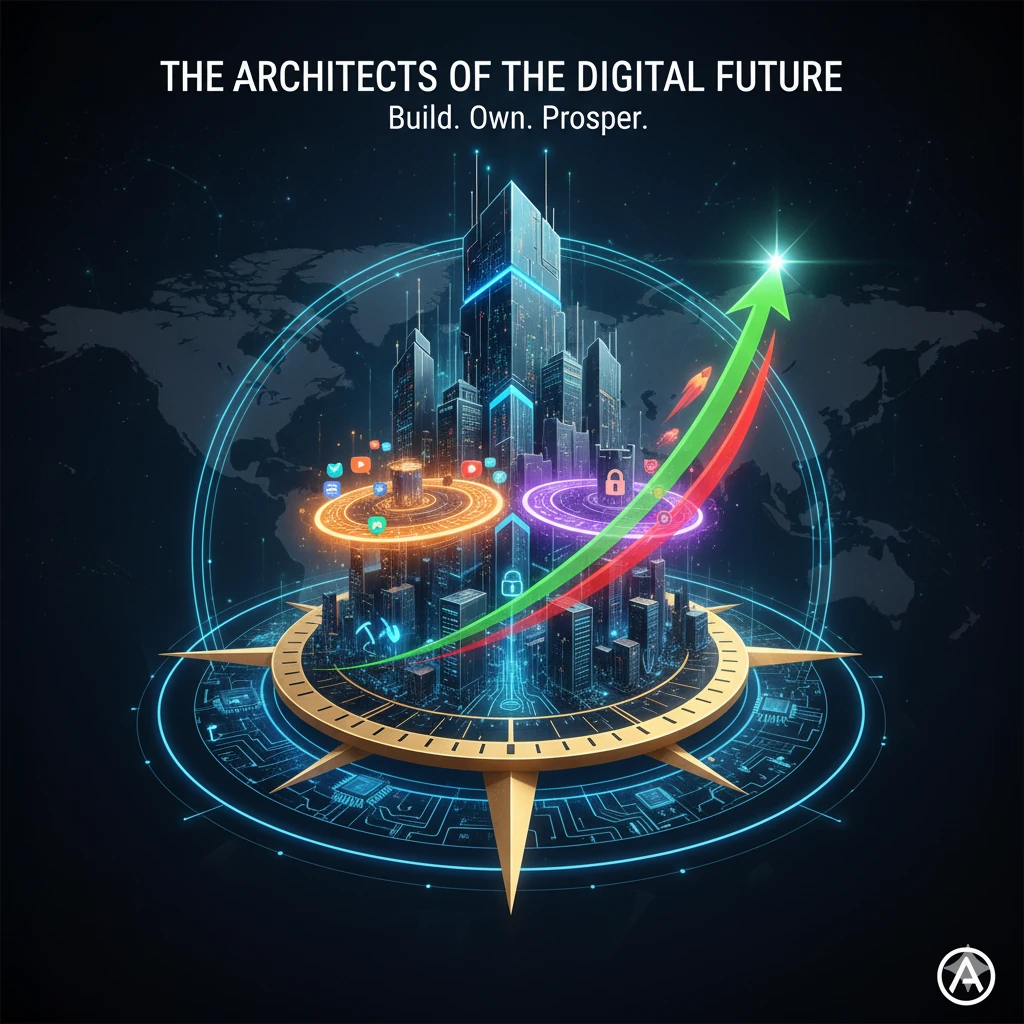
𝐈𝐧𝐭𝐫𝐨𝐝𝐮𝐜𝐢𝐧𝐠 𝐌𝐲 𝐈𝐧𝐯𝐞𝐬𝐭𝐦𝐞𝐧𝐭 𝐓𝐡𝐞𝐬𝐢𝐬: 𝐓𝐡𝐞 𝐀𝐫𝐜𝐡𝐢𝐭𝐞𝐜𝐭𝐬 𝐨𝐟 𝐭𝐡𝐞 𝐃𝐢𝐠𝐢𝐭𝐚𝐥 𝐅𝐮𝐭𝐮𝐫𝐞
For the past several months, I have been deeply analyzing my core investment principles and refining the strategy that guides my portfolio. This work has led to a clear thesis that I am formally introducing today.
Many investors have looked at the market recently with confusion. Why is the S&P 500 hitting new highs when most of its stocks are down? Why are a handful of "tech" companies driving 90% of the returns?
Is this a bubble?
My answer is no. This is not an anomaly; it is a 𝐬𝐭𝐫𝐮𝐜𝐭𝐮𝐫𝐚𝐥 𝐬𝐡𝐢𝐟𝐭. The old model of diversification is breaking down because it no longer reflects the economy we live in. We are in the first phase of a new industrial revolution, and this revolution is being built by a select group of companies.
I call them the 𝐀𝐫𝐜𝐡𝐢𝐭𝐞𝐜𝐭𝐬 𝐨𝐟 𝐭𝐡𝐞 𝐃𝐢𝐠𝐢𝐭𝐚𝐥 𝐅𝐮𝐭𝐮𝐫𝐞.
My portfolio is being realigned to focus exclusively on this thesis. An "Architect" is a company that builds the essential, non-negotiable infrastructure of the modern world. They don't just 𝐮𝐬𝐞 the new economy; they 𝐨𝐰𝐧 the roads, the bridges, the power plants, and the public squares of it.
This is my investment strategy, simplified:
𝟭. 𝗧𝗵𝗲 𝗙𝗼𝘂𝗻𝗱𝗮𝘁𝗶𝗼𝗻 (𝗣𝗶𝗹𝗹𝗮𝗿 𝟭: 𝗜𝗻𝗳𝗿𝗮𝘀𝘁𝗿𝘂𝗰𝘁𝘂𝗿𝗲)
These are the "picks and shovels" of the AI revolution. You cannot build a data center, train a model, or run a cloud service without them. My focus here is on the non-negotiable monopolies: the chip designers ($NVDA), the lithography ($ASML), the cloud platforms ($MSFT, $GOOGL), and the design software ($SNPS).
𝟮. 𝗧𝗵𝗲 𝗣𝗹𝗮𝘁𝗳𝗼𝗿𝗺𝘀 (𝗣𝗶𝗹𝗹𝗮𝗿 𝟮: 𝗧𝗵𝗲 𝗗𝗶𝗴𝗶𝘁𝗮𝗹 "𝗦𝗾𝘂𝗮𝗿𝗲𝘀")
These companies own the "land" where digital life happens. They are the public squares where billions of people gather, communicate, and are entertained. They don't just sell ads; they own the entire ecosystem of attention ($META, $GOOGL) and content distribution ($NFLX).
𝟯. 𝗧𝗵𝗲 𝗦𝗽𝗲𝗰𝗶𝗮𝗹𝗶𝘀𝘁𝘀 (𝗣𝗶𝗹𝗹𝗮𝗿 𝟯: 𝗡𝗶𝗰𝗵𝗲 𝗟𝗲𝗮𝗱𝗲𝗿𝘀)
These are companies with "moats" (competitive advantages) so deep they are virtually untouchable in their specific, critical field. This includes the infrastructure for cybersecurity ($PANW), data analytics ($DDOG), and the core software that runs global business.
𝟰. 𝗧𝗵𝗲 𝗖𝗮𝘁𝗮𝗹𝘆𝘀𝘁𝘀 (𝗣𝗶𝗹𝗹𝗮𝗿 𝟰: 𝗦𝗽𝗲𝗰𝗶𝗮𝗹 𝗢𝗽𝗽𝗼𝗿𝘁𝘂𝗻𝗶𝘁𝗶𝗲𝘀)
This is the only part of the portfolio that looks for high-growth opportunities 𝐨𝐮𝐭𝐬𝐢𝐝𝐞 the core "Architect" thesis. This includes event-driven catalysts (like $TTWO and the GTA6 launch) or dominant regional leaders ($MELI) that are, in effect, building their own ecosystems from the ground up.
𝐖𝐡𝐲 𝐓𝐡𝐢𝐬 𝐌𝐚𝐭𝐭𝐞𝐫𝐬
Investing in an index today means you own the 490+ companies that are 𝐜𝐮𝐬𝐭𝐨𝐦𝐞𝐫𝐬 of the 10 companies that are the 𝐀𝐫𝐜𝐡𝐢𝐭𝐞𝐜𝐭𝐬.
My strategy is to bypass the customers and invest directly in the 𝐀𝐫𝐜𝐡𝐢𝐭𝐞𝐜𝐭𝐬. This requires a concentrated, high-conviction portfolio. It is the logical response to a market that is fundamentally, and permanently, changed.